
Hybrid Events
How to Advance Slides for a Speaker in Another Country
Advance slides for a speaker in another country: setup, what latency to expect and the backup plan if the link drops.
If you have ever sat in a Zoom call saying "next slide please" to a colleague, you already know why a zoom presentation remote is worth setting up before your next call. Screen sharing in Zoom or Microsoft Teams puts your slides in front of everyone, but it does not give you a way to advance them from anywhere except your keyboard. A presenter remote fixes that gap.
This post covers how remote slide control works inside video calls, what it does and does not do, and how to set it up in under five minutes.
It is worth being precise here, because it trips people up. A presenter remote does not control Zoom or Teams itself. It controls the presentation software you are sharing, PowerPoint, Keynote, Google Slides or similar, running on your computer. Zoom and Teams simply broadcast whatever is on your screen, including the slide changes your remote triggers.
There is no plugin or add-in inside the meeting platform. Cliqer runs as a desktop app alongside your meeting software and drives the presentation app directly, focus-independent in most cases, so your slides advance whether or not the presentation window is the one currently in focus.
Zoom and Teams both let a host "give" or "take" presenter control to another participant, but that is designed for handing the whole call over, not for letting one person drive their own slides while staying a regular participant. It is clunky in practice:
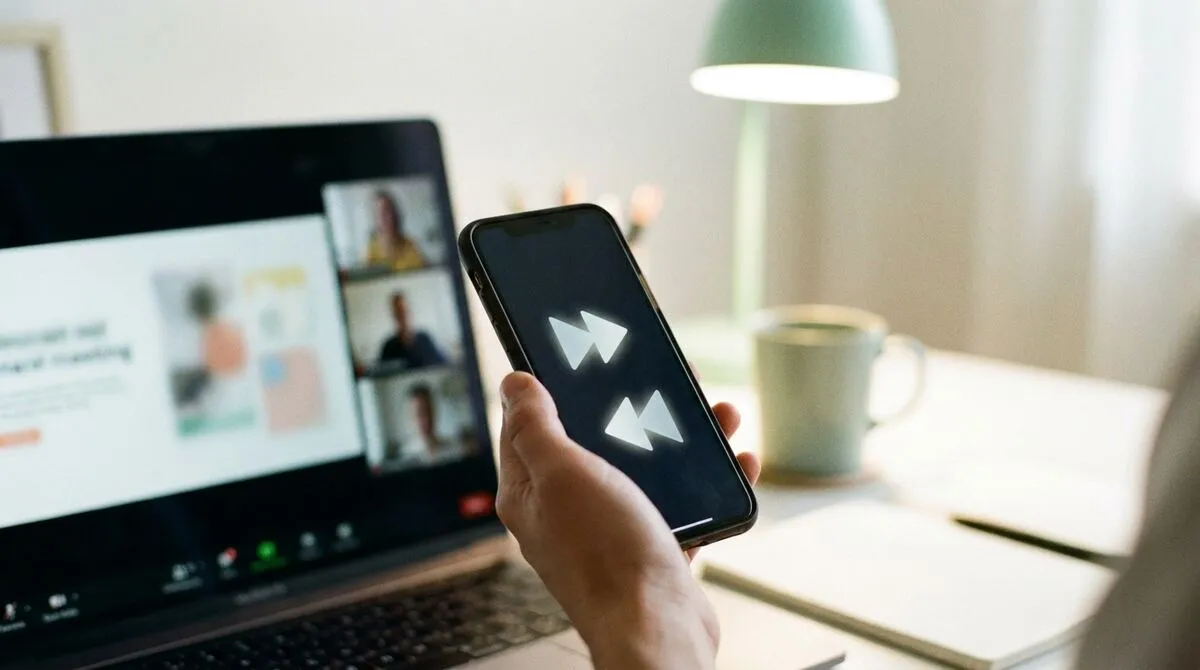
A dedicated presenter remote sidesteps all three: you keep your own laptop's screen share running, your phone (or a colleague's) sends the next and previous commands, and handoffs between speakers become a matter of sharing a link rather than reassigning screen control inside the call.
Install Cliqer on the computer you will screen share from. Get it from the download page.
Open your presentation in PowerPoint, Keynote, Google Slides or whatever you use, and start the slideshow.
Join or start your Zoom or Teams meeting , then begin screen sharing your presentation window.
Share the Cliqer presenter link or QR code with whoever needs to advance slides, yourself included, on any phone or tablet.
Slide changes triggered from the remote show up in your screen share exactly like a keypress would.
Functionally, no. Cliqer talks to your presentation software, not to the meeting platform, so the setup steps are identical whether you are on Zoom or Microsoft Teams. The same applies to Google Meet, Webex, GoTo and Slack or Discord calls, since the pattern is always screen share plus independent slide control.
| Situation | Built-in Zoom/Teams control | Presenter remote |
|---|---|---|
| Solo presenter, own laptop | Fine, keyboard in reach | Fine, hands free |
| Presenter without laptop access (standing, pacing) | Awkward | Comfortable |
| Multiple speakers trading slides | Requires re-sharing or handing control | Just pass the link |
| Presenter joining from a phone only | Not supported for sharing | Works as the remote, host still needs a computer |
Panels and webinars with several presenters are where a shared remote setup earns its keep. Rather than re-sharing screens or handing Zoom's presenter role back and forth, each speaker's segment can be cued from the same room, and the host computer stays the one thing screen sharing to the call. We go deeper on the multi-speaker version of this in running hybrid events with remote speakers and multi-host presentations.
The pattern above holds for a one-off client pitch, but it holds just as well for a recurring webinar series or a panel with guests dialing in from several time zones. If your format leans more webinar than meeting, our webinar slide control post covers the audience-facing side of the same setup: how to keep control with the presenter even as questions and chat pile up.
Panels with guest speakers joining as live callers rather than screen sharers are a slightly different shape again, closer to a broadcast than a meeting. If you are bringing remote guests into a bigger production rather than a straightforward Zoom or Teams call, see bringing remote guests on stage with live callers for how that setup differs.
Either way, the core idea does not change: the person talking should be the one moving the slides, not whoever happens to have the keyboard closest.
Remote connects but slides do not move
Confirm the presentation software has focus or that Cliqer's background permissions are granted, covered in the usage guide.
Choppy or delayed clicks on office Wi-Fi
Corporate networks sometimes restrict direct connections. See why corporate firewalls block presentation tools for what is happening and how the fallback route works.
Screen share freezes mid-call
That is usually a video pipeline issue rather than the remote itself, our post on what to do when slides freeze mid-presentation covers the common causes.
Yes. It controls your presentation software, not the meeting platform's host permissions, so any participant screen sharing their own slides can use it.
Yes, the same desktop app and remote work the same way across Zoom, Teams, Google Meet, Webex, GoTo, Slack and Discord, since it is your presentation software being controlled, not the meeting app.
No. They open a link in any browser on their phone, tablet or laptop. Only the computer sharing its screen needs the Cliqer desktop app.
The remote reconnects automatically once your connection is back, resuming the same session rather than forcing you to restart the share.
Yes. Plenty of Cliqer rooms never touch a video call, a phone in your pocket controlling a laptop on a lectern works the same way in a physical room as it does inside a Zoom window. Screen sharing is just how the slides reach a remote audience.
A presenter remote takes less time to configure than joining an early call to test your camera. Download Cliqer free from the download page, or see the pricing page for the paid tiers if you also want screen share audio and a laser pointer for bigger sessions.
How to Use Your Phone as a Presentation Clicker
Turn any phone into a presentation clicker in minutes: no hardware, no pairing, no batteries, just a browser link.
Teach from Anywhere in the Room: Phone Clickers for Lecturers
A clicker for lecturers with no dongle and no app to install: advance slides from your phone anywhere in the hall.
Keep reading
Practical guides for presenters, AV crews and event teams, plus the Cliqer releases that matter. No spam, one click to leave.